
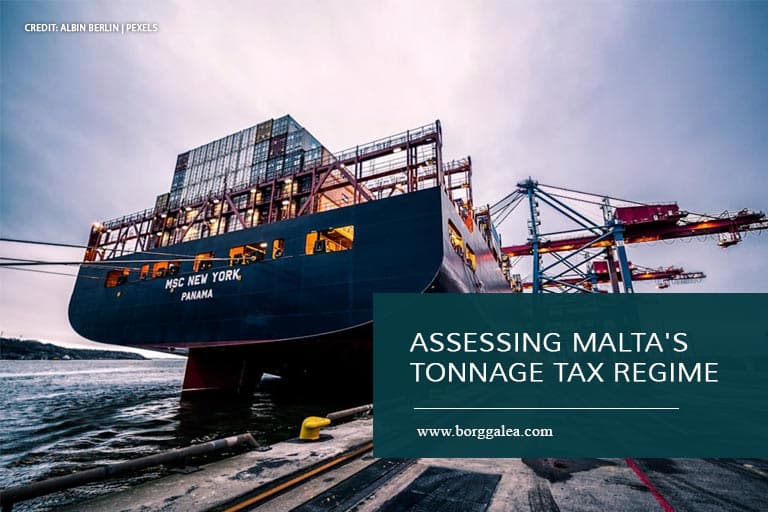
The Maritime Sector constitutes a fundamental component of the Maltese economy, with Malta's entrance into the European Union propelling it to become a leading maritime hub across the Mediterranean region.
Malta has established a comprehensive legal and regulatory framework specifically tailored to the shipping industry. This framework has facilitated the development of the Maltese shipping flag into a highly esteemed international ship register, currently ranking as one of the largest globally. As per one of our recently related published articles, Malta’s maritime flag registry specifically ranks first in Europe and sixth globally in terms of registered tonnage.
Notwithstanding Malta's strategic current focus towards fostering a robust framework for the super-yacht industry, mirroring the achievements of the shipping merchant fleet, a primary incentive for numerous ship-owners in selecting the Malta Flag relate principally to Malta’s Tonnage Tax Rules.
Principally, a shipping company is liable to pay tonnage tax rather than income tax on the actual profits registered by the company. This type of tax is mainly calculated based on ship net tonnage, that is on the volume of ships operated by the shipping company.
Effective from December 17, 2017, the European Commission (EC) granted conditional approval to the Maltese Tonnage Tax Rules for a ten-year period. Subsequent to this decision, the Maltese government amended its Tonnage tax rules during 2018 principally through the implementation of legal notices 127 and 128. Such synchronisation evidently boosted trust and confidence of ship-owners towards the Maltese flag and its accompanying legislative framework.
Apart from the legal and regulatory framework, the above-mentioned implementation of Malta’s tonnage tax regime also brought about several fiscal benefits. Shipping organisations are granted exemption from tax on income generated from shipping operations in accordance with the provisions of the Income Tax Act. There is also no stipulated minimum tonnage requirement for eligibility.
Another fiscal benefit relates to the tax exemptions on the distribution of profits derived from shipping activities to the shareholders, provided that such profits are also declared exempt from tax when in the hands of the shipping organisation. Aligned to this key benefit, Malta's Tonnage Tax Regime provides a stable and predictable tax environment for shipping companies. By allowing tax to be calculated based on the tonnage of the vessels rather than on traditional corporate profits, it ensures low and consistent taxation.
The Takeaway
As Malta continues to establish itself as a thriving maritime hub, it is increasingly attracting a diverse array of shipping organizations, driven in part by the recent approval of the Malta Tonnage Tax Regime. These fiscal incentives are poised to enhance Malta's visibility within the merchant shipping industry, reaffirming its position as a leading player in the field. Notably, the Tonnage Tax Scheme offers extensive coverage, making different types of ships engaged in various shipping activities eligible for participation. This makes Malta an attractive jurisdiction for ship owners and operators, encouraging investment in the maritime sector and boosting the country's shipping registry.